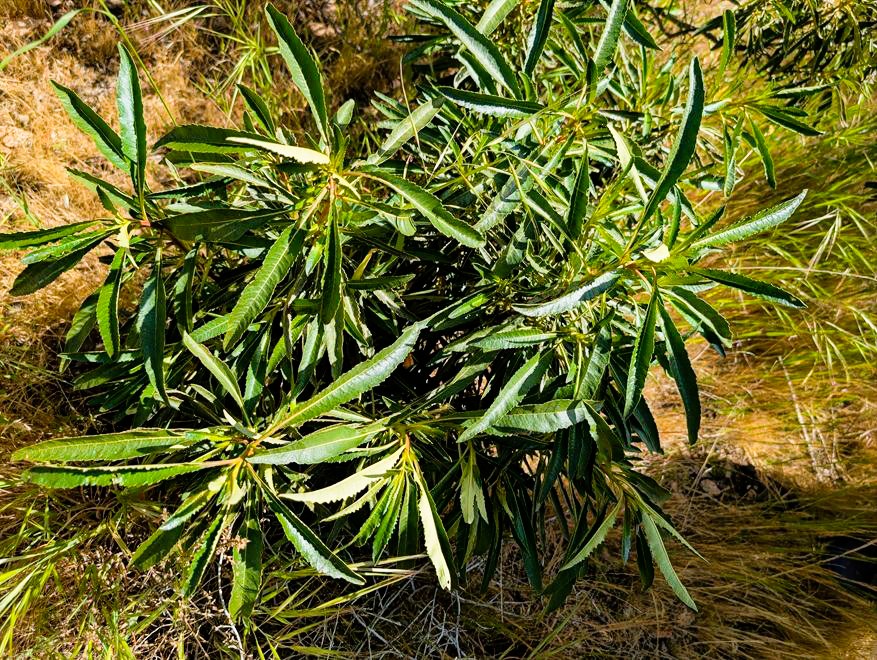
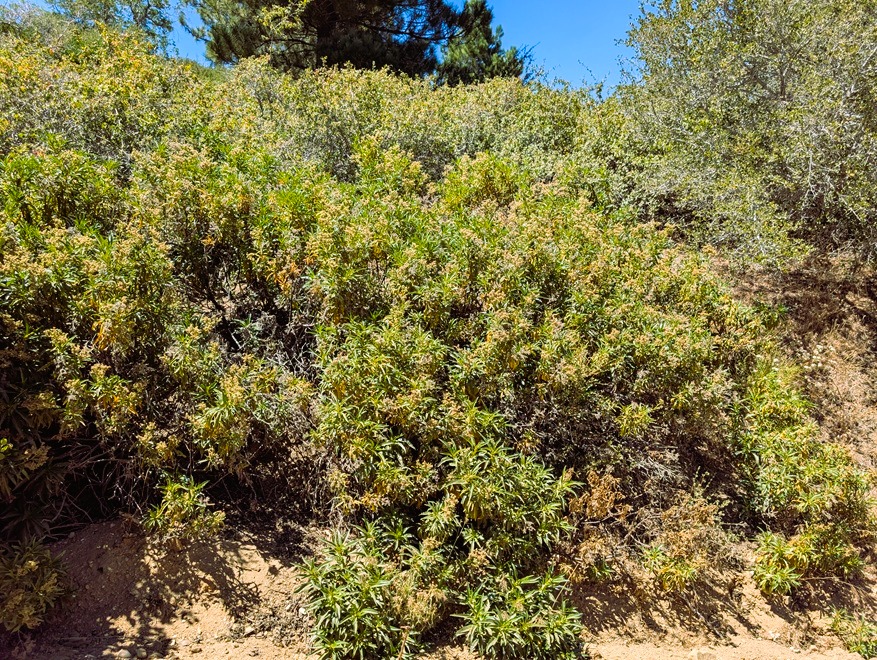
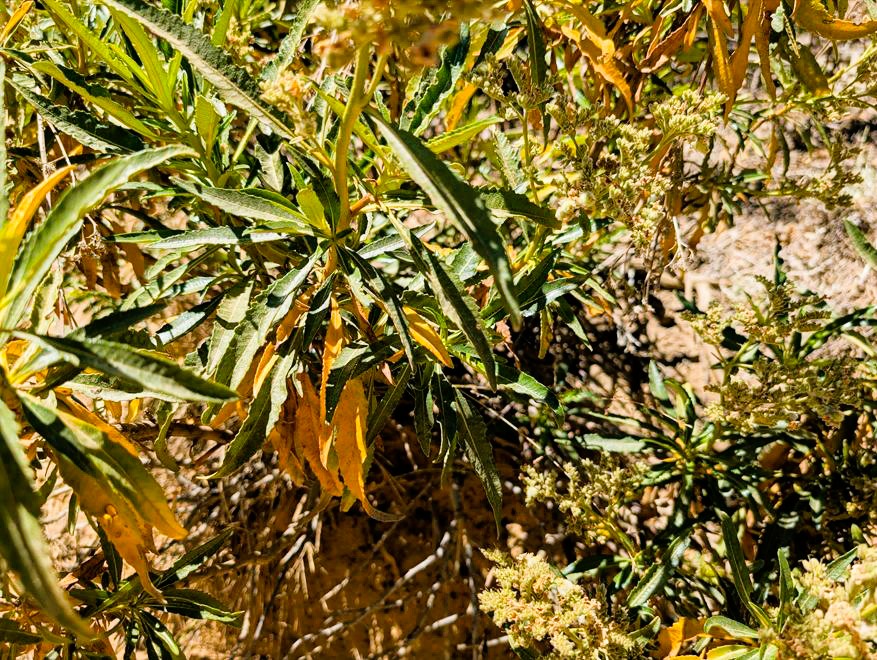
Yerba Santa — Spanish for "sacred herb" — is one of the great mountain remedies of the Southern California backcountry. Its Latin name, Eriodictyon trichocalyx, is a mouthful, but the plant itself is unforgettable once you know it: a sticky-leaved, resinous shrub that traditional herbalists and native peoples alike have long turned to for clearing the head and calming the cough.
Getting to Know Yerba Santa
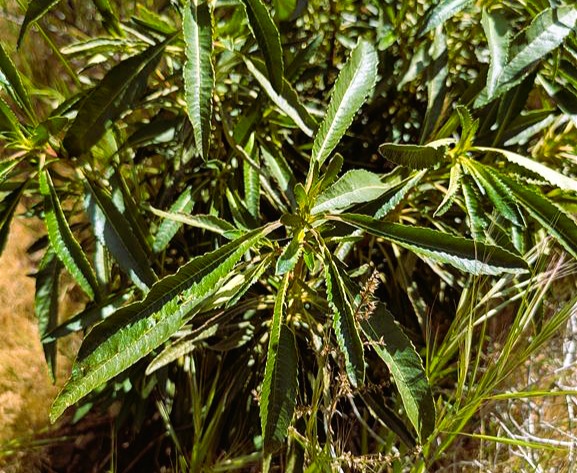
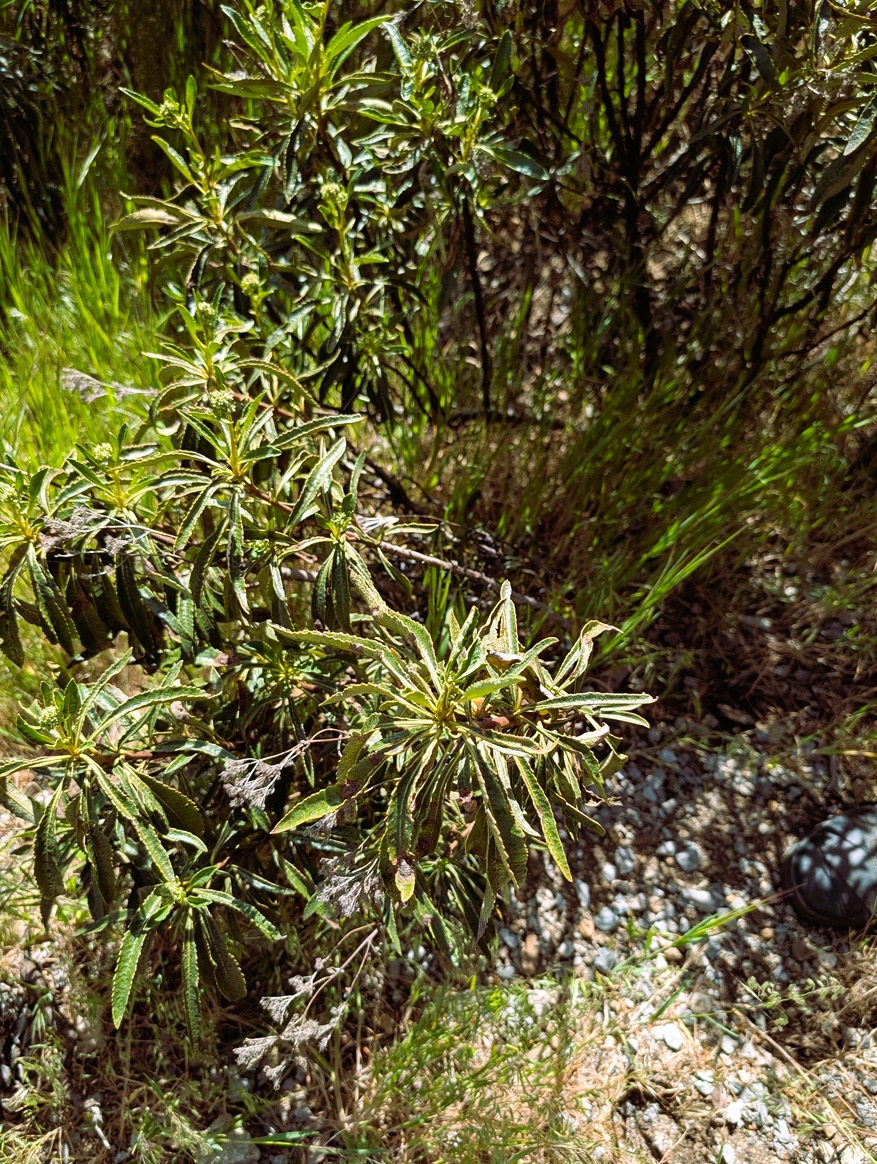
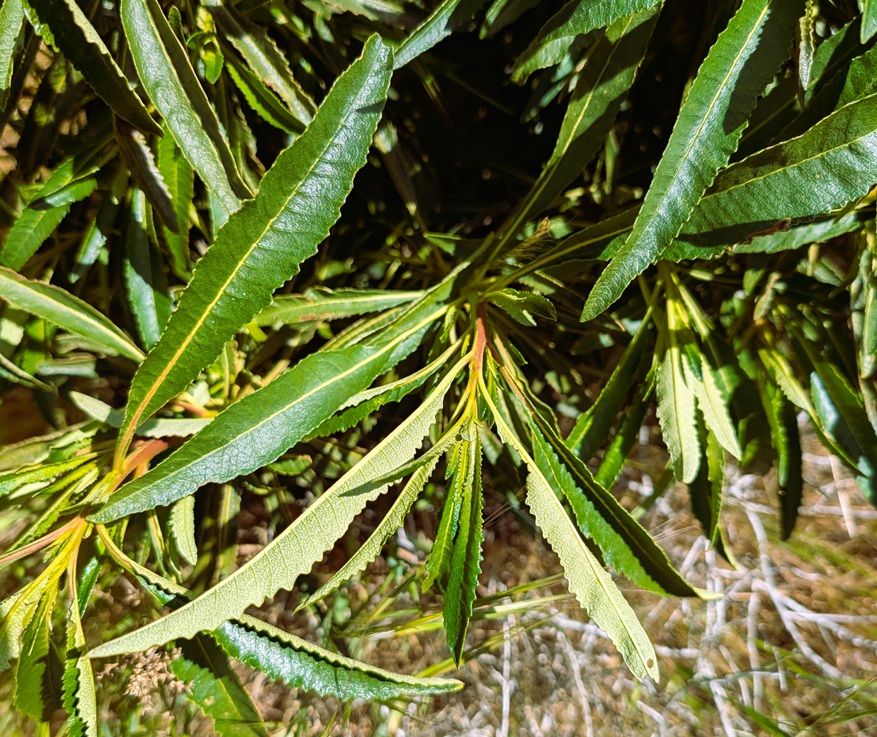
This species goes by several affectionate names — Hairy Yerba Santa, Shiny Leaf Yerba Santa, Mountain Balm, and even Bear Plant — and it's native to Southern California and Baja California. It's an evergreen shrub with long, narrow leaves coated in a sticky, fragrant resin — a trait that gives the plant its slightly shiny, almost varnished look. Rub or crush a leaf and the aromatic, slightly balsamic scent is unmistakable. In early spring the leaves emerge tender and sticky, gradually toughening and taking on a more leathery texture as the season progresses, and by late summer some of the older leaves will begin to yellow and drop.
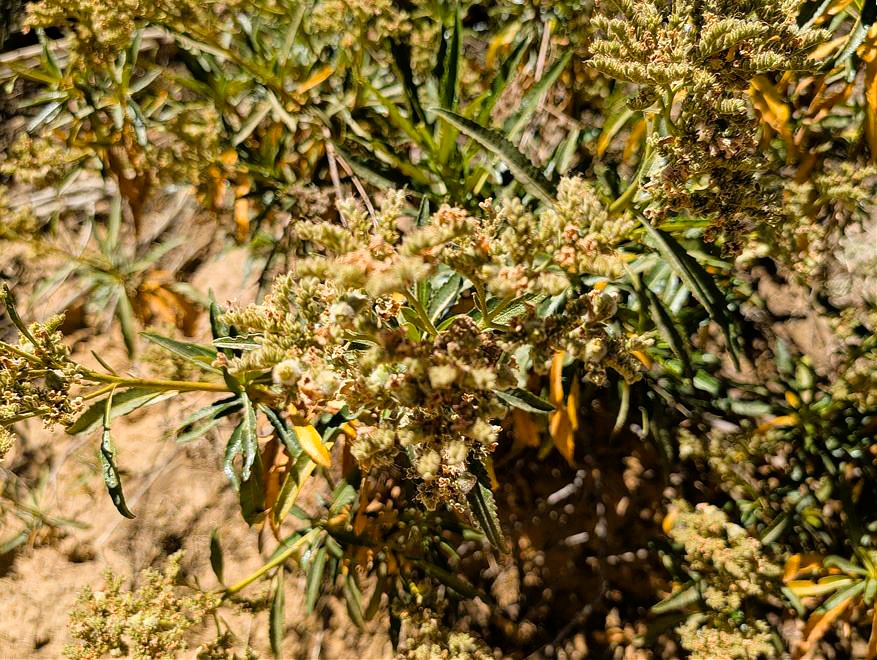
When it blooms, the bush produces clusters of funnel- to bell-shaped flowers in shades of white to lavender-purple, densely hairy on the outside and gathered together at the tips of the branches. They typically flower from April through July, and the display draws in bees, butterflies, and hummingbirds. Yerba Santa favors dry, sunny slopes and chaparral — exactly the kind of terrain you'll find throughout the Southern California mountains.
If you're wondering when to forage, timing does matter. Most experienced herbalists recommend gathering the leaves before the plant flowers, when the resin is at its most concentrated and the leaves are at their most potent. Once the bush turns its energy toward blooming and, later, seed production, that concentration can taper off a bit — though some foragers prefer waiting until fall, when the leaves become especially sticky and aromatic again. So while before flowering is generally considered the sweet spot, it isn't the only good time to harvest — just know the leaves may not be quite as resinous once the blooms have come and gone.
The resin on those leaves can literally be seen and felt, and it's now one of the hallmark ways I identify the plant.
A Plant Traditional Herbalists Treasured
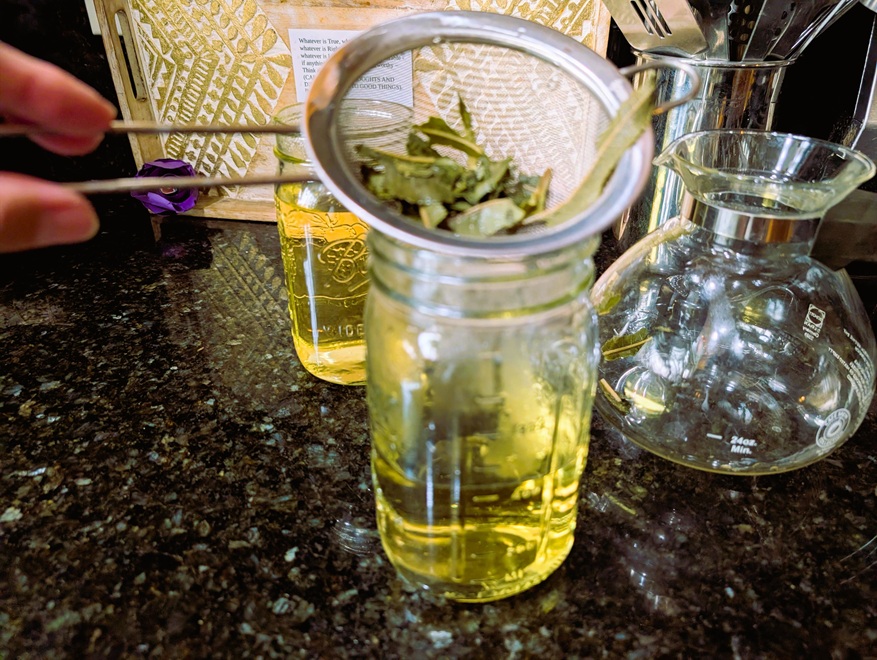
Yerba Santa is often brewed as a tea, and it is known to dry up mucus — resolving runny noses and clearing the sinuses. The tea is quite tasty, but I don't recommend drinking too much of it, because it is so effective at drying up mucus that it can dry a person out to the point of a bloody nose. This amazing plant is also used in the making of natural cough medicines and cold medicines.
Indigenous peoples of the region have long relied on Yerba Santa in much the same way — brewing the leaves into teas or using them for steam inhalations to help with colds, coughs, sore throats, asthma, and even tuberculosis.
The botany teacher I went on an herbalism adventure with once shared a story with our group: he had met a woman with severe asthma who was collecting large quantities of Yerba Santa in the area for a German company that used it to make cough syrup. Simply from the act of collecting the Yerba Santa — she never drank it as a tea — her asthma resolved.
Beyond respiratory relief, the leaves have traditionally been used for pain and inflammation. Fresh or boiled leaves were made into a poultice or a tea bath to help ease arthritis, rheumatism, fevers, and sore joints.
The leaves have a place in wound care too. Pounded into a poultice, they've been used to help stop bleeding, and applied topically to soothe bruises and sprains.
The leaves are also known to ward off thirst. Chew on a leaf and it will make you salivate, a trick worth knowing on a long, dry mountain trail. Some people simply chew the leaves to keep the mouth fresh, since Yerba Santa has a pleasant, resinous, sweet taste.
That same powerful resin makes Yerba Santa a favorite for smudging. Its scent is beautiful and its aromatics are strong, so the dried leaves are often bundled and burned, or added into smoking blends...I think I'm going to try that one day.
Yerba Santa and Brain Health: A Promising New Chapter
I recently came across some fascinating research on Yerba Santa that has made this plant even more special to me. Alzheimer's disease runs in my family, so when I learned that scientists at the Salk Institute for Biological Studies have been studying a compound in Yerba Santa for its potential to protect the brain, I started drinking Yerba Santa tea regularly — in fact, I had a cup less than ten minutes before writing this.
The Salk team's early research centered on Eriodictyon californicum, but as their work expanded across the genus, they found the same beneficial compound in several other Yerba Santa species, including Eriodictyon trichocalyx — the very plant featured on this page.
The star of their research is a flavanone called sterubin. According to the Salk Institute's findings, sterubin appears to address several pathways of neurodegeneration at once. In laboratory studies, it has been shown to help prevent nerve cell death, reduce inflammation in the brain, and act as an iron chelator — clearing unbound iron that can accumulate in aging brains and contribute to oxidative stress and nerve damage. It has also been shown to trigger the brain's own survival pathways and antioxidant production.
It's still early research, largely carried out in cells and in an Alzheimer's mouse model, and there's more work ahead before anything like this becomes an established treatment. But it's remarkable to think that a plant Southern California's indigenous peoples have turned to for generations — one they called the "holy herb" — may also hold promise for a dis-ease process that severely affected my Grandmother, one of the most heartbreaking dis-eases of our time.
Yerba Santa Resources
| Borosilicate Glass Teapot | The glass teapot I use to brew my Yerba Santa tea. I have had mine for years and in fact have two, just in case. It has never failed me and does its job well. I use mine on a natural gas stove with an actual flame with no issues, and it also comes with a metal adapter for use with electric stove tops. |
| Stainless Steel Mesh Strainers | After my Yerba Santa tea is done steeping, I strain it out into my teacup using my handheld mesh stainless steel strainers. |
| Medicinal Plants of the Mountain West | A wonderful reference book by Michael Moore, with a great section devoted to Yerba Santa. One of the books I turn to again and again for identification and traditional use. |
Yerba Santa in the Wild
Click any image to open it full size.